
50 sfumature di rosa: il romanzo del vino rosato.

[vc_row full_width_row=”true”][vc_column][vc_column_text]

50 sfumature di rosa: il romanzo del vino rosato.

Il vino rosato può essere leggero e frivolo ma anche profondo e strutturato.
Richiedono sensibilità e attenzione per essere apprezzati.

Il mondo dei vini rosati è quindi complesso, ricercato, fatto di equilibri, nuance e sfumature.

[/vc_column_text][dt_fancy_image image_id=”4664″ width=”600″ align=”center”][vc_column_text]

II vino rosato nasce da uve rosse che vengono vinificate con un contatto
di qualche ora delle bucce con il mosto.
Un tempo breve che serve proprio a permettere alle bucce
di rilasciare nel mosto un po’ di colore ed aromi.

Ma come nascono i rosati?
Le sostanze che “colorano” il vino sono nelle bucce dell’uva.
Per produrre vini rosa, occorrerà dunque partire da uve a bacca rossa.
A seconda del tempo in cui il mosto sta a contatto con le bucce,
potrà assumere una colorazione che va dal rosa molto pallido fino al rosa molto carico.
La tonalità del rosa dipende oltre che dal tempo di contatto tra mosto e bucce anche dal vitigno e
dalla temperatura con cui avviene la vinificazione.

1) da pressatura diretta: dopo la pigiatura:
il mosto viene subito separato dalla bucce;
in questo caso, la cessione di colore è minima e si avrà un colore rosa quasi impercettibile.

2) con macerazione sulle bucce molto breve:
in questo caso il contatto tra mosto e bucce dura qualche ora
(in genere dalle 2-3 ore, fino a un massimo di 12 ore).

3) con macerazione prolungata:
è un metodo di produzione uguale al precedente,
ma il contatto tra mosto e bucce può variare dalle 12 alle 24 ore;
in questo caso si avranno vini rosa più corposi e di colore più carico.

4) da salasso:
la qualità di questo tipo di vini rosa è variabile,
poiché è una tecnica utilizzata da chi vuole produrre vini rossi più corposi e concentrati.

Quando bere Rosé?
E’ consigliato consumare il vino rosato attorno ai 10°-12°C,
in modo che possa esprimere tutti i propri aromi e dare sensazioni morbide e rotonde in bocca.
Il Rosè è il vino mediterraneo per eccellenza, dal forte potere ristoratore nelle calde giornate estive,
ma ormai destagionalizzato e adattato a mille usi nel corso dell’anno.
Piace anzi per la sua adattabilità a molte situazioni e versatilità in cucina.

Con cosa abbinare i rosati?
Quasi con tutto! I vini Rosati sono ottimi aperitivi, ovvio abbinamento con salumi; con il sushi è un must;
ma provateli con una zuppa o una frittura di pesce;
con qualsiasi primo, è il re dei piatti freddi estivi.
Perfetto per insalate di pollo e vitello tonnato;
la rotondità e la morbidezza lo rendono compagno ideale
di tante spezie, soprattutto il Curry!

Ora non vi resta che scegliere il vostro vino Rosato e godervelo!
Ricordate che anche per il Rosé,
una giusta conservazione sarà fondamentale per una degustazione perfetta.

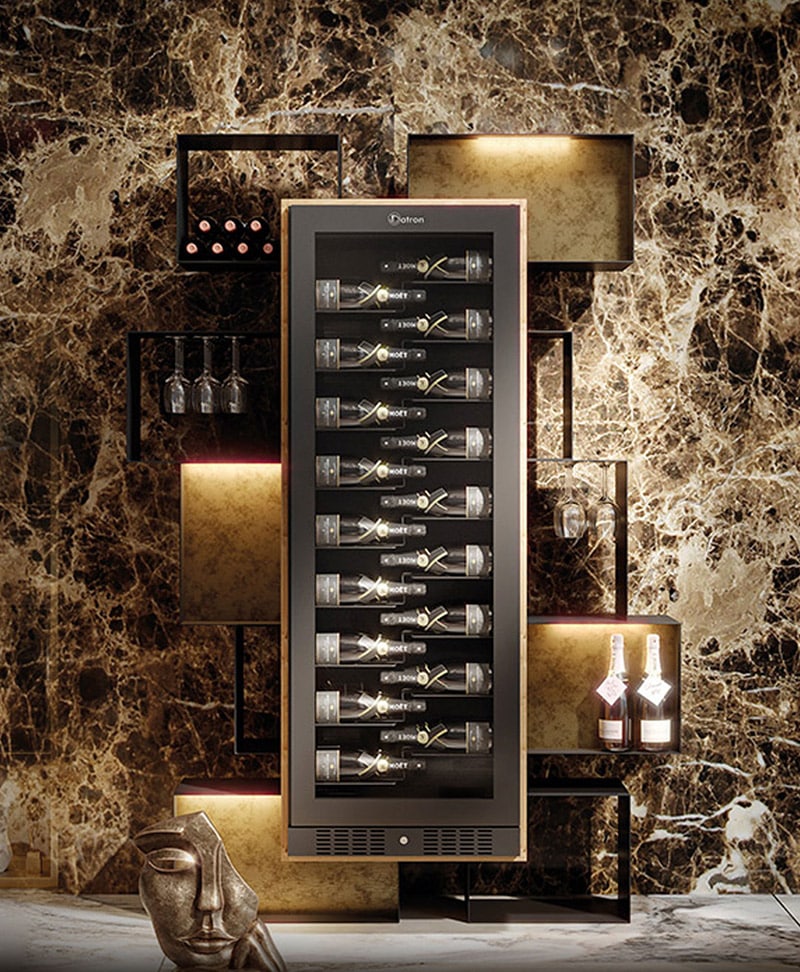
Le migliori soluzioni per la conservazione del tuo vino, scopri le cantinette vino Datron >>>

LEGGI GLI ALTRI ARTICOLI DEL BLOG

[/vc_column_text][/vc_column][/vc_row]
50 shades of rosé: Ein Roman zum Thema Roséwein

[vc_row][vc_column width=”1/2″][vc_column_text]

50 shades of rosé: Ein Roman zum Thema Roséwein

Roséwein kann leicht und frech, aber auch kräftig und strukturiert sein. Es bedarf eines
gewissen Feinsinns und Interesse, um diesen Wein zu schätzen. Roséwein ist
vielschichtig und raffiniert, und setzt sich aus einer Balance von Nuancen und Aromen
zusammen.

Der Roséwein wird aus roten Trauben gewonnen, die nach ein paar Stunden Kontakt
zwischen Schale und Most vinifiziert werden.
Für diesen Vorgang benötigt es nur sehr kurze Zeit, die dazu dient, dass die
Traubenschalen etwas Farbe und Aromen an den Most abgeben.

Aber wie werden Roséweine nun hergestellt?
Die Essenzen die den Wein “färben” befinden sich in den Traubenschalen. Für die
Herstellung von Roséweinen geht man daher immer von roten Trauben aus. In der Zeit,
in der der Most mit den Traubenschalen in Kontakt kommt, nimmt er deren Farbe an, die
von hell- bis tiefrosa reicht. Der Rosaton hängt aber nicht nur von der Kontaktzeit zwischen
Most und Schale ab, sondern auch von der Rebsorte und der Temperatur, bei der die
Weinbereitung stattfindet.

1) Direktes Keltern:
Nach der Weinpresse wird der Most sofort von den Schalen getrennt.
In diesem Fall ist die Farbübertragung minimal und ein fast nicht wahrnehmbarer Rosaton
wird gewonnen.

2) Sehr kurze Mazeration der Schalen:
In diesem Fall dauert der Kontakt zwischen
Most und Schalen einige Stunden (in der Regel 2-3 bis maximal 12 Stunden).

3) Lange Mazeration:
Es handelt sich um eine ähnliche Herstellungsmethode; der Kontakt
zwischen Most und Schalen kann zwischen 12 bis 24 Stunden variieren. Daraus
entstehen vollmundige Roséweine mit intensiver Farbe.

4) Saignée–Methode:
Die Qualität der Roséweine, die nach dieser Methode gewonnen werden,
unterscheidet sich. Sie wird von Winzern praktiziert, die auch vollmundige und intensive
Rotweine herstellen.

Wann soll man sich für Roséwein entscheiden?
Roséwein sollte bei 10° C bis 12° C konsumiert werden, so kann er all seine Aromen
entfalten und im Mund wird ein weiches und rundes Gefühl wahrgenommen. Roséwein
ist der mediterrane Wein par excellence. Er hat stark anregende und erfrischende Wirkung
an heißen Sommertagen. Da er sich aber mittlerweile saisonal angepasst hat, wird er für viele
andere Anlässe auch das ganze Jahr genossen. Besonders wird er für seine
Anpassungsfähigkeit geschätzt.

Was passt zu Roséweinen?
Fast alles! Roséwein ist ausgezeichnet als Aperitif. Er passt zu Aufschnitt und Fingerfood,
zu Sushi ist er ein Muss. Probieren Sie ihn aber auch zu Suppe oder frittiertem Fisch.
Er ist der König für Vorspeisen und kalte Sommergerichte. Serviert wird er auch zu frischen
Salaten mit Thunfisch, Hühnchen und Kalbfleisch. Sein runder und weicher Abgang machen
ihn zum idealen Begleiter für Gerichte mit Gewürzen und frischen Kräutern, insbesondere
mit Curry!

Jetzt gilt es nur noch Ihren Roséwein auszuwählen und zu genießen!
Denken Sie aber daran, dass auch für Roséwein eine ordnungsgemäße Konservierung für
den idealen Trinkgenuss unerlässlich ist.

Entdecken Sie die Datron Weinkühlschränke, um die besten Lösungen für die Lagerung
Ihres Weins zu finden.


DATRON BLOG >[/vc_column_text][/vc_column][vc_column width=”1/2″][dt_fancy_image image_id=”4693″ width=”600″][/vc_column][/vc_row]

50 shades of rose: A novel about rosé wine

[vc_row][vc_column][vc_column_text]

50 shades of rose: A novel about rosé wine

Rosé wine can be light and arrant, but also strong and structured. It takes certain
sensitivity and attention to appreciate this wine. Rosé wine is multi-layered and refined,
balanced between different nuances and aromas.

[/vc_column_text][/vc_column][/vc_row][vc_row][vc_column][dt_fancy_image image_id=”4674″ width=”600″ align=”center”][/vc_column][/vc_row][vc_row][vc_column][vc_separator][vc_column_text]

Some advice to keep in mind when you make your choice:

1 – First, the wine bottle and especially the label must be presented to you, even if the
bottle is already open. In this way, the guest can look at all important information about
the wine before making its final decision.


2- The wine should be tasted by someone at the table.

3 – And if we want to taste another wine by the glass? The glass must always be clean,
best if aseptic and odourless. If it is the same wine, but of a new bottle, it should never
be poured into a half-empty glass, after you’ve made sure that it is not flawed.


4 – Wine by the glass also follows the classic rules when it comes to the correct serving
temperature: white wine between 6 and 8 degrees, red wine between 14 and 18 degrees.


5 – Wines served by the glass often go to the fridge in the meantime. However, avoid
exposing open wine bottles to excessive temperature differences for too long time.
The best would be to keep wine in the wine cooler.


This is where Datron, the specialist in wine coolers, comes into play. Our wide range of
products deals with every requirement.

[/vc_column_text][/vc_column][/vc_row]

Search
×